
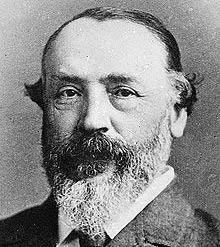
The Labouchere betting system is another popular approach used in roulette and other casino games. It is also known as cancellation or positive progression system which resembles the Martingale method but is less risky and will probably not reach the table limit too quickly. The invention of the Labouchere system is believed to be connected with British politician Henry Labouchere, a finance minister of Queen Victoria, who was fond of gambling. However, the exact origins of the system are unknown.
The Labouchere roulette system is applied for the outside even-money bets which have less risks in roulette game and bring more consistent wins. This is how it works: a player writes down a sequence of numbers which will influence the size of the bet. For example, this sequence is:
1 - 2 - 3 - 4 - 5 - 5 - 4 - 3 - 3 - 2
The very first bet in the roulette cycle will be the sum of the first and last numbers in the sequence above: 1+2=3. If the bet wins, these two numbers are excluded from the sequence:
2 - 3 - 4 - 5 - 5 - 4 - 3 - 3
The next bet will be the sum of the numbers that are now the first and last ones: 2+3=5. If there is a winning streak, the player continues crossing out the numbers and when the whole sequence is completed the player starts all over again with the same line of numbers (or it can be changed).
Every time the player loses the bet he adds the number of his first bet to the end of the sequence, in this case it will look like this (if the very first bet is a losing one):
1 - 2 - 3 - 4 - 5 - 5 - 4 - 3 - 3 - 2 - 3
Here is the scheme how the roulette betting amount varies with each losing and winning bet. To explain the pattern we use the following sequence of numbers: 1-2-2-3-2: